
Azure Arc is a critical change in the management of hybrid clouds. It enables organisations to manage, secure, and automate the resources in any environment.

Introduction:
The digital transformation of the business has become a new reality with the hybrid and multi-cloud model taking the place of the traditional one. Businesses are currently using workloads on on-premises data centres, numerous public clouds, and the edge. This confusion provides flexibility and scalability – but it brings in complexity, there are gaps in governance, and complexity in visibility. Azure Arc is bringing hybrid clouds to a new definition by integrating an on-premises environment, multi-cloud environment, and edge environment on a single control plane. It is not simply a continuation of Azure it is a unification layer that changes how absence of organisations operate in a distributed IT scenario.
Note: Boost your cloud computing career with Microsoft Azure Training in Noida at Croma Campus. Learn from certified experts through hands-on sessions, real-world projects, and industry-aligned curriculum.
The Changing Face of Hybrid Cloud:
The modern IT world does not have organisations that depend on one environment. Organisations commonly have an intertwining of conventional data facilities, virtualized environments, and workloads which are dispersed in different clouds that may include AWS, Google Cloud and Azure.
Though it is appropriate in terms of flexibility and keeping costs down, this hybrid approach introduces organisational silos, inconsistent application of policies, and sophisticated security stances. To further know about it, one can visit Azure Training. Every environment regards its tools, APIs and models of governance, thus centralised visibility seems almost unfeasible.
One solution provided to this fragmentation is Azure Arc, which will allow organisations to deal with all resources, both within and outside Azure, within the framework of one and the same. It transforms any environment at any place closer to the management, governance, and security of the Azure-natives.
What Makes Azure Arc a Game-Changer:
Azure Arc radically alters the way companies operate on multi- and hybrid infrastructures. Instead of relying on the state of an existing system, it imports non-Azure resources to the Azure control plane, which allows central monitoring and management. Similar to discussing system capabilities that render Azure Arc transformative, this is the first thing we should explore.
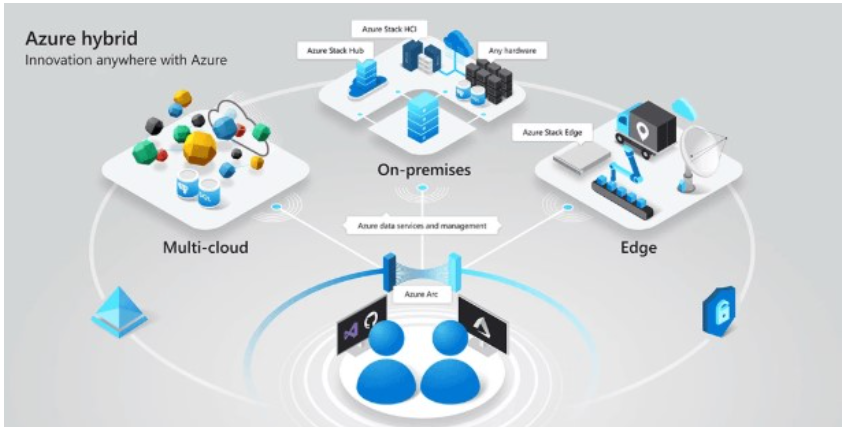
Cohesive Resource Management On Environments:
Azure Arc is an extension of Azure Resource Manager (ARM) to non-Azure environments and enables the management of all the servers, Kubernetes clusters, and data services as native Azure assets. The single-pane-of-glass approach to management simplifies the complex multi-environment operations and raises the visibility of the whole organisation. The functions that organisations can perform with Arc are as follows:
- Managed Windows and Linux servers in any location on Azure.
- Connect between KUBs in AWS, the Google Cloud or between on-prem infrastructure.
- Tag, manage, and track everything in one similar portal.
- Use uniform policies and mass automation.
Note: Enhance your cloud computing skills with Microsoft Azure Training in Gurgaon at Croma Campus. Gain hands-on experience in Azure services, architecture, and deployment. Our expert-led training helps you prepare for top Azure certifications and boosts your career in cloud technology.
Consistent Governance and Compliance:
One of the largest issues in hybrid IT is governance and compliance. Divided environments are likely to provoke the problem of fragmented policy implementation and risk.
Azure Arc removes this inconsistency by expanding Azure policy, Role-based Access Control (RBAC) and Microsoft Defender for Cloud to connected resources. This integrated compliance model is used in controlled procedures such as the finance or healthcare industries, which have uniformity in governance and are not dependent on the location of workloads. This means the following:
- Equivalent security within and between clouds, both in the form of tagging bases.
- The embedded monitoring of compliance, along with automated remediation.
Enabling Azure Services Anywhere:
Access to most Sunny services in any other environment, including one that is not an Azure data centre, is one of the capabilities of the Arizona Arc. Using Arc, organisations can implement Azure SQL Managed Instance, PostgreSQL Hyperscale, or App Services right on-premises or in different clouds. The benefits of Arc-enabled cloud services include:
- Scaling and versions are automated.
- Standardised surveillance and payment.
- Assimilated with Azure management software.
Note: Boost your cloud computing career with Microsoft Azure Training in Delhi at Croma Campus. Learn from industry experts through hands-on projects, real-time scenarios, and certification-oriented modules. Master Azure services like Virtual Machines, Storage, Networking, and Security.
Uncomplicated Multi-Cloud Kubernetes Management:
Kubernetes node management may be complicated due to the fact that the services and processes across the clouds may be managed with different sets of tools, policies, and configurations. This is standardised at Azure Arc, where any CNCF-fulfilling Kubernetes cluster can integrate with Azure. Once connected:
- Visions: It is possible to handle clusters through GitOps to regularly maintain configuration.
- Azure policy may prevent security and compliance.
- Defender and Azure Monitor allow monitoring and protection.
Hybrid DevOps and GitOps Integration:
In Modern DevOps, automation, repeatability, and speed are required (in any environment). Blue Arc is synergistic with Azure DevOps, GitHub actions, and bubble Bicep/ARM templates, which gives teams enhanced possibilities concerning the automated offering of infrastructure provisioning, deployments, and policy enforcement at scale. This model is focused on automation and enables hybrid cloud management to become foreseeable and scalable as well as auditable. With the aid of Git ops, configuration modifications in Git repositories are transparently spread across all Arc-supported resources, providing:
- Version-controlled infrastructure.
- Fast rollback functionality.
- Complete access to change history.
What do many people believe about Azure Arc?
To many Although incomprehensible, adopted more and more, Azure Arc has become misunderstood. So, deciding what Azure Arc is and what it is not, it is important to clear some of it. Many institutes provide Microsoft Azure Certification courses, and enrolling in them can help you start a career in this domain.
- Not a Migration Tool: Azure Arc does not migrate workloads to Azure; it binds and operates workloads that are already present.
- It is not a Replacement of Azure Stack: Azure Stack offers existing infrastructure with the extension of management of Azure. Arc extends Azure management to the current infrastructure.
- Not Independent of the Azure: Arc is fully functional as it has an Azure management and governance backbone.
- Precisely, Azure Arc would be an extension of what you already have in place to offer; it is not a substitute.
Architectural Foundations of Azure Arc:
In Modern DevOps, automation, repeatability, and speed are required (in any environment). Blue Arc is synergistic with Azure DevOps, GitHub actions, and bubble Bicep/ARM templates, which gives teams enhanced possibilities concerning the automated offering of infrastructure provisioning, deployments, and policy enforcement at scale. This model is focused on automation and enables hybrid cloud management to become foreseeable and scalable as well as auditable. With the aid of Git ops, configuration modifications in Git repositories are transparently spread across all Arc-supported resources, providing: